
Best AI Research Tools in 2026 (I Actually Tested These)
AI research has changed a lot in the last few years. Before, doing research meant opening 20 tabs, scrolling through blogs, checking sources, and still feeling unsure. Now, AI research tools are doing most of the heavy lifting. But here’s the thing — not all AI research tools are actually good. Some look fancy but give shallow answers, and others are powerful but confusing as hell.
I spent the last few weeks testing different AI research tools for real research work — articles, market research, fact-checking, and deep topic exploration. This isn’t one of those copied lists. I actually used these tools, broke them, trusted them, and sometimes got annoyed by them.
So yeah, here’s my honest list of the best AI research tools right now, ranked by usefulness, accuracy, and how much they actually help with research.
Why AI Research Tools Matter More Than Ever
Research today isn’t just about finding info. It’s about:
- Speed
- Accuracy
- Sources you can trust
- Understanding complex topics fast
AI research tools help by:
- Summarizing long papers
- Finding patterns
- Citing sources
- Comparing viewpoints
- Saving insane amounts of time
If you’re a student, founder, marketer, developer, or just someone who does research online, these AI tools can literally change how you work.
Top 5 AI Research Tools
- Perplexity AI (Best Overall AI Research Tool)
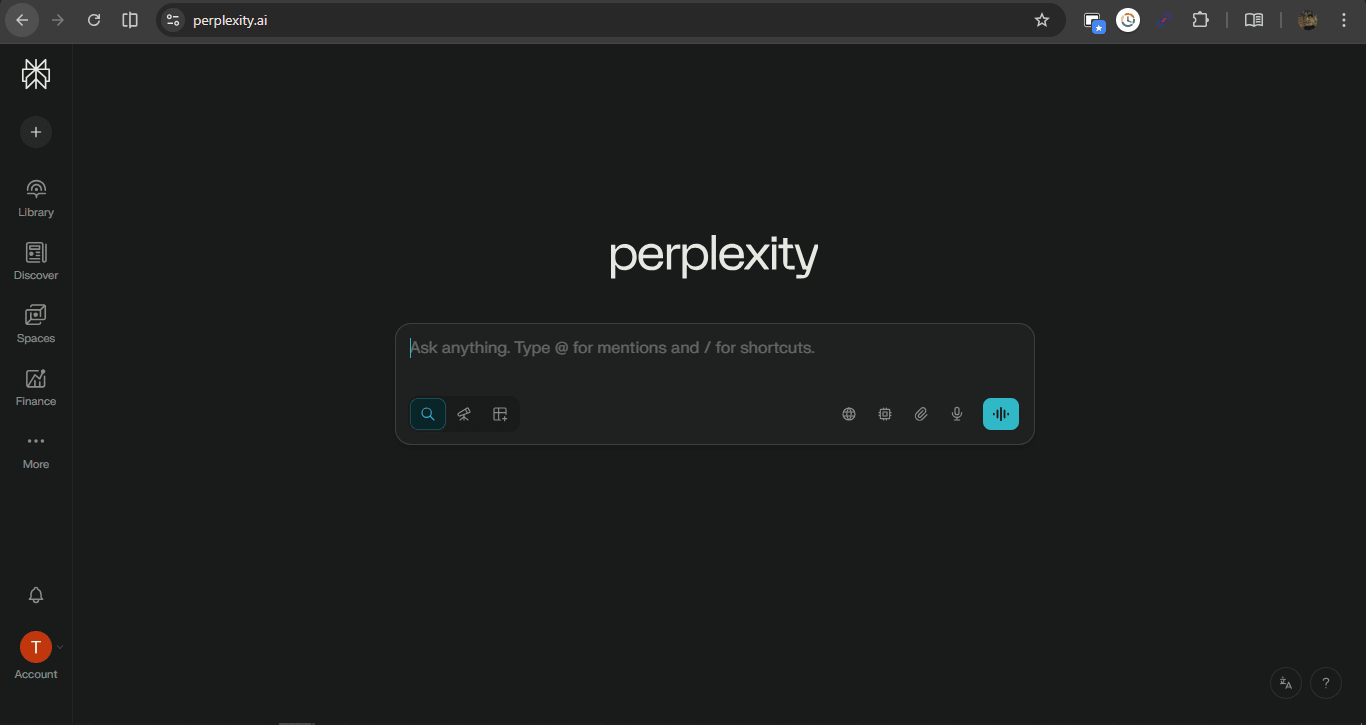
I’ll be honest — Perplexity is the best AI research tool I’ve tested so far.
What makes Perplexity different from other AI tools is that it feels like Google + a research assistant that actually understands context. Instead of just answering, it researches.
Why Perplexity is so good for research
- Gives sources by default
- Pulls info from multiple websites
- Lets you dig deeper with follow-up questions
- Works great for technical and non-technical research
- Market research
- AI trend research
- Medical and science topics
- Comparing tools and companies
Downside? Sometimes it plays it a bit too safe, and the tone is more factual than creative. But for research? That’s actually a good thing.
- Elicit (Best AI Tool for Academic Research)
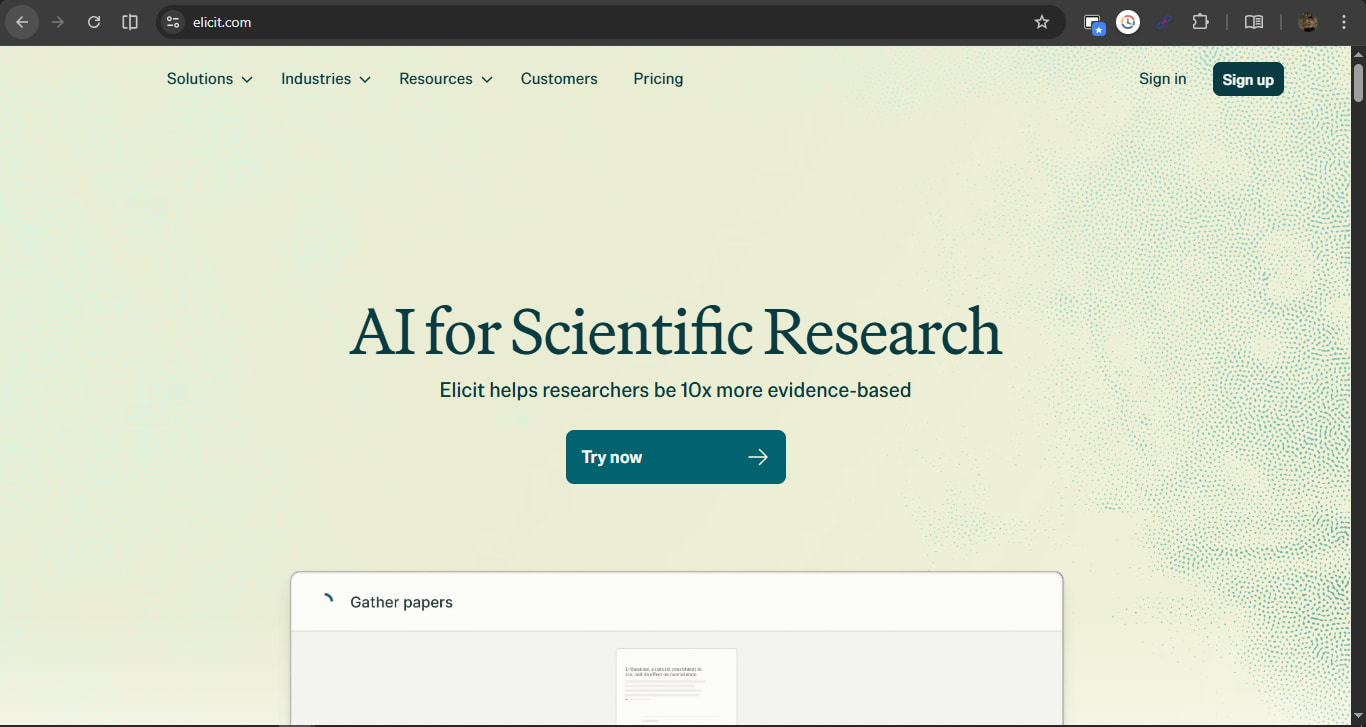
If your research involves papers, studies, or academic sources, Elicit is insanely useful.
Elicit focuses on:
- Research papers
- Scientific studies
- Evidence-based answers
What I liked
- Great for literature reviews
- Shows methodology and conclusions
- Saves hours of reading
- Not great for casual research
- UI feels a bit stiff
- Consensus (AI Research with Evidence First)
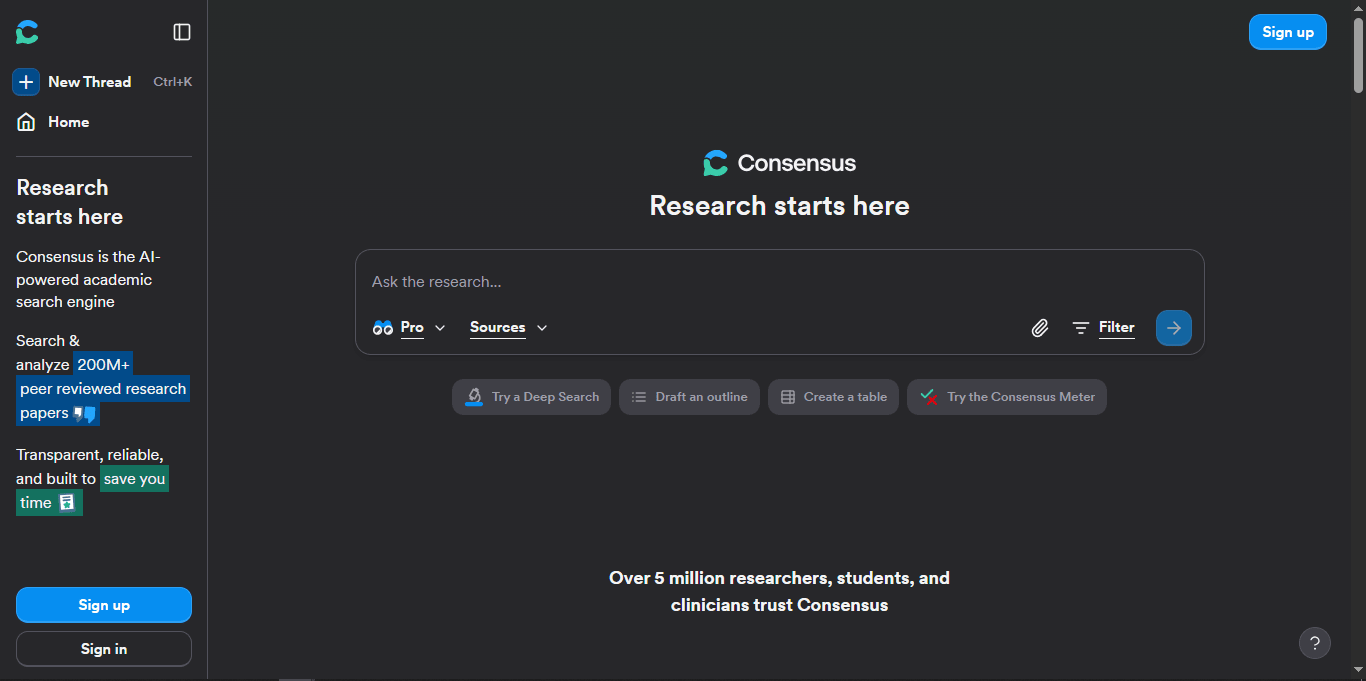
Consensus is another AI research tool that focuses heavily on evidence.
You ask a question, and instead of opinions, it tells you:
- What studies say
- Whether experts agree or disagree
- How strong the evidence is
- Health research
- Psychology
- Nutrition
- Policy topics
One small issue is it doesn’t always explain things deeply, so you may need to ask follow-ups or combine it with another AI tool.
- Scite AI (Best for Checking Citations)
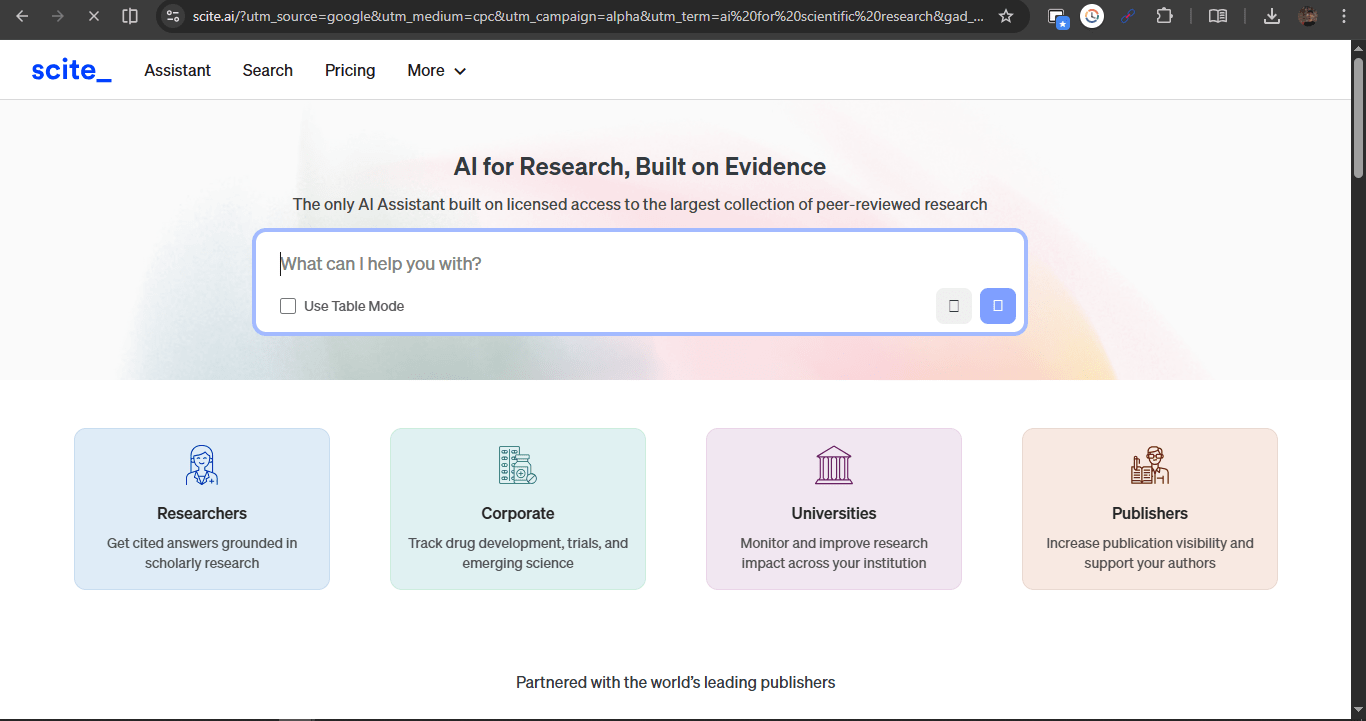
Scite is less about generating answers and more about checking research credibility.
It shows whether a paper is:
- Supported by other studies
- Mentioned neutrally
- Or contradicted
I mostly used Scite as a secondary research tool, not a primary one. But when it comes to validating sources, it’s super helpful.
- Research Rabbit (Best for Discovering New Papers)
Research Rabbit feels more like a research discovery tool.
You start with one paper, and it shows you:
- Related papers
- Authors in the same field
- Citation networks
How I Use These AI Research Tools Together
Here’s my actual workflow (nothing fancy):
- Start with Perplexity for broad research
- Use Elicit or Consensus for deeper evidence
- Validate key claims with Scite
- Explore more papers using Research Rabbit
This combo covers:
- Speed
- Accuracy
- Depth
- Source verification
No single AI tool does everything perfectly, but together they make research way easier and less stressful.
Are AI Research Tools Replacing Humans?
Short answer: no.
AI research tools don’t replace thinking. They replace:
- Boring searching
- Endless scrolling
- Repetitive reading
You still need to:
- Judge credibility
- Understand context
- Make decisions
AI just helps you get there faster. Sometimes it even gets things wrong, which is why checking sources still matters. Blindly trusting any AI tool is a bad idea.
Final Thoughts: Which AI Research Tool Should You Use?
If you only pick one:
👉 Perplexity — best overall AI research tool
If you’re academic:
👉 Elicit + Consensus
If you care about citations:
👉 Scite
If you explore new topics:
👉 Research Rabbit
AI research tools are getting better every month, and honestly, once you use them properly, going back to old-school research feels painful.
Research is still work, but with the right AI tools, it’s faster, smarter, and way less annoying.